The issue: HPV disease
Human papillomavirus (HPV) is the most common sexually transmitted infection worldwide and affects both sexually active men and women. Although HPV infection is often harmless, long-lasting infection can lead to a variety of life-threatening cancers. Each year, HPV is estimated to cause more than 630,000 new cancer cases and 311,000 deaths globally [1]. The vast majority of the cancers caused by HPV –530,000–are cervical cancers, but HPV strains have also been associated with cancers of the vulva, vagina, anus, penis, and oropharynx [1].
HPV continues to present as a major threat to women’s health as it is the primary cause of cervical cancer, ranking as the fourth most common cancer among women worldwide [2]. However, over 85% of the global burden of HPV-related cervical cancers falls disproportionately among women in low and middle-income countries [2]. In most sub-Saharan regions in Africa, cervical cancer is the most leading cause of cancer deaths among women, leading to nearly 112,000 cases of cancer and over 76,000 deaths each year [3]. In Bolivia, cervical cancer is the leading cause of female cancer cases and deaths and faces nearly 2,000 new cases and over 1,000 deaths annually [4]. As low- and middle-income countries (LMICs) face severely limited access to prevention, screening, and treatment services, more women are dying of cervical cancer than are dying in childbirth [5]. HPV is preventable through effective screening and vaccination measures. To combat cervical cancer, it is essential to advocate for building and supporting optimized local programs, guiding rapid country adoption of revisions in vaccine schedule recommendations, and accelerating HPV vaccine introduction.
To date, three safe and efficacious HPV vaccines have been prequalified by the World Health Organization. These vaccines protect against more than 70% of cancer-causing HPV infections, making HPV vaccination the most cost-effective intervention for the prevention of cervical cancer [2]. A study published in the Lancet in 2020 predicted that vaccination against HPV in girls ages 9-14 years could avert 61 million cases of cervical cancer in the next century [6], suggesting that high HPV vaccination coverage among girls can lead to the elimination of cervical cancer in most LMICs. In 2020, the WHO (World Health Organization) launched a global strategy to eliminate cervical cancer by 2030 [7]. Achieving this goal rests on their 90-70-90 targets, consisting of:
- 90% of girls fully vaccinated with the HPV vaccine by the age of 15
- 70% of women screened using a high-performance test by the age of 35, and again by the age of 45
- 90% of women with pre-cancer treated and 90% of women with invasive cancer managed
Despite the proven safety, efficacy, and cost-effectiveness of HPV vaccines, there are significant barriers in global implementation and coverage remains suboptimal. Several LMICs face health system barriers in human resources and limited sustainable financing that compromise the ability to effectively implement HPV vaccine programs. Although Gavi, the Vaccine Alliance has provided funding to support national programs for HPV vaccination, many LMICs still do not qualify for Gavi support. Currently, less than 30% of LMICs have introduced HPV vaccination compared to more than 85% of high-income countries [6].
The increasing health system strain imposed by COVID-19 creates challenges in improving HPV vaccine supply and uptake. Stay-at-home orders and social distancing measures have led to the suspension of immunization activities in various countries and increased the risk of under-immunization in low-resource settings. In countries that have introduced the HPV vaccine, the pandemic resulted in 1.6 million girls unable to be vaccinated [8]. Furthermore, only 13% of girls were vaccinated against HPV worldwide, declining from 15% in 2019 [8].
Citations
- de Martel C, Plummer M, Vignat J, Franceschi S. Worldwide burden of cancer attributable to HPV by site, country and HPV type. Int J Cancer. 2017 Aug 15;141(4):664–70.
- Human papillomavirus (HPV) and cervical cancer [Internet]. [cited 2021 Aug 3]. Available from: https://www.who.int/news-room/fact-sheets/detail/human-papillomavirus-(hpv)-and-cervical-cancer
- Sub-Saharan Africa [Internet]. The Cancer Atlas. [cited 2021 Aug 3]. Available from: http://canceratlas.cancer.org/n6X
- HPV INFORMATION CENTRE [Internet]. [cited 2021 Aug 3]. Available from: https://hpvcentre.net/datastatistics.php
- Aylward J. Global burden of cervical cancer – TogetHER for Health [Internet]. https://togetherforhealth.org/. [cited 2021 Aug 3]. Available from: https://togetherforhealth.org/global-burden-cervical-cancer/
- Brisson M, Kim JJ, Canfell K, Drolet M, Gingras G, Burger EA, et al. Impact of HPV vaccination and cervical screening on cervical cancer elimination: a comparative modelling analysis in 78 low-income and lower-middle-income countries. Lancet. 2020 Feb 22;395(10224):575–90.
- Cervical cancer elimination initiative [Internet]. [cited 2021 Aug 3]. Available from: https://www.who.int/initiatives/cervical-cancer-elimination-initiative
Who we are
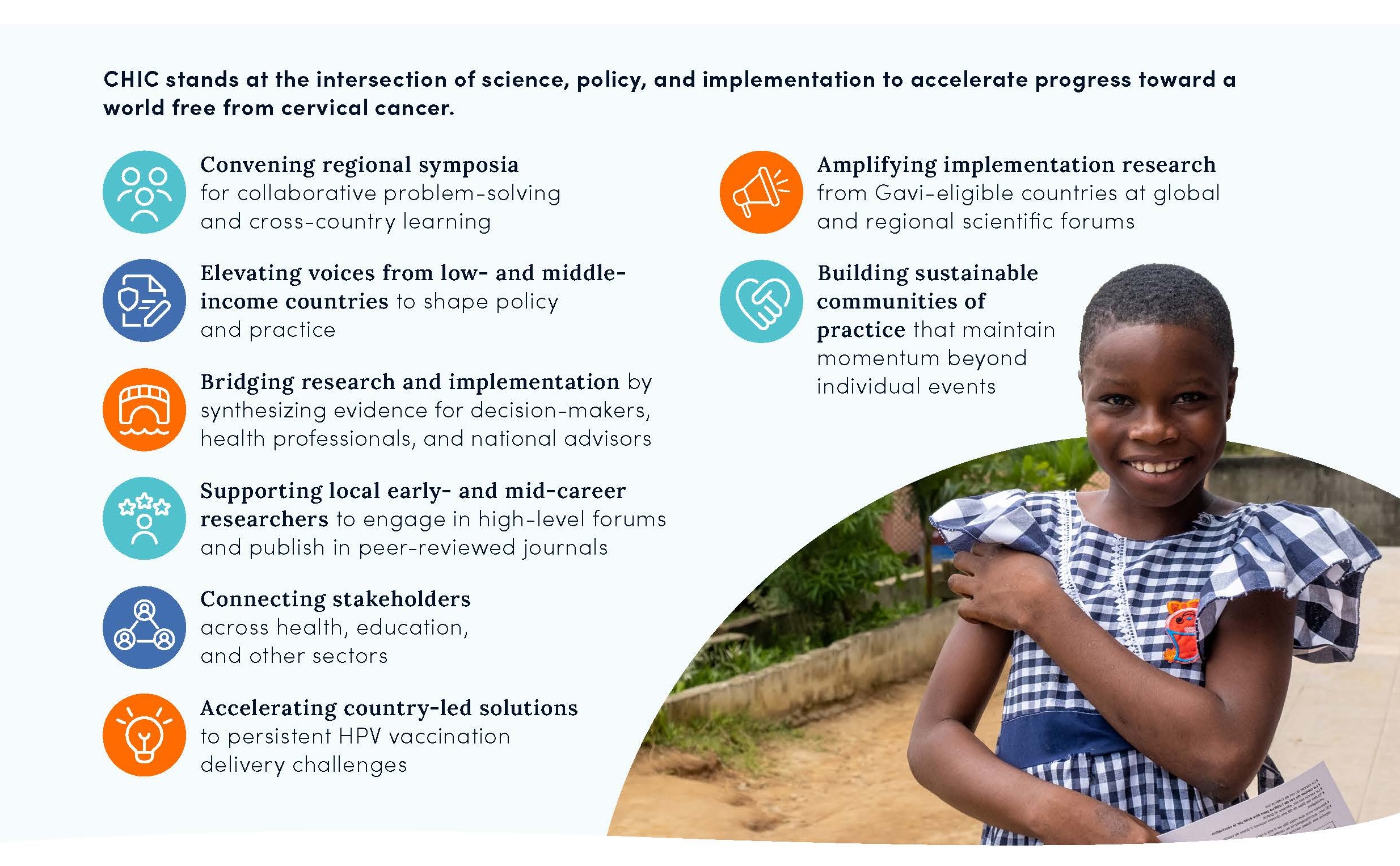
This initiative serves to unite the efforts and resources of 3 partnering organizations, combining the efforts and expertise of colleagues from Jhpiego, the Centre for the Evaluation of Vaccination (CEV) at the University of Antwerp, and the Vaccine Confidence Project (VCP) at the London School of Hygiene and Tropical Medicine (LSHTM). Together, we are working to build and support optimized local programs, guide rapid country adoption of revisions in schedule recommendations, and accelerate HPV vaccine introduction. The overarching goal is efficient translation of implementation research findings to guide practice and more equitable access to immunization ideally within the context of a stable HPV vaccine market.
The goal of this project is to accelerate progress in HPV vaccine introduction, access, and program optimization in Gavi-eligible countries.
To reach this goal, we will work collectively to achieve the following primary and intermediate objectives/outcomes:
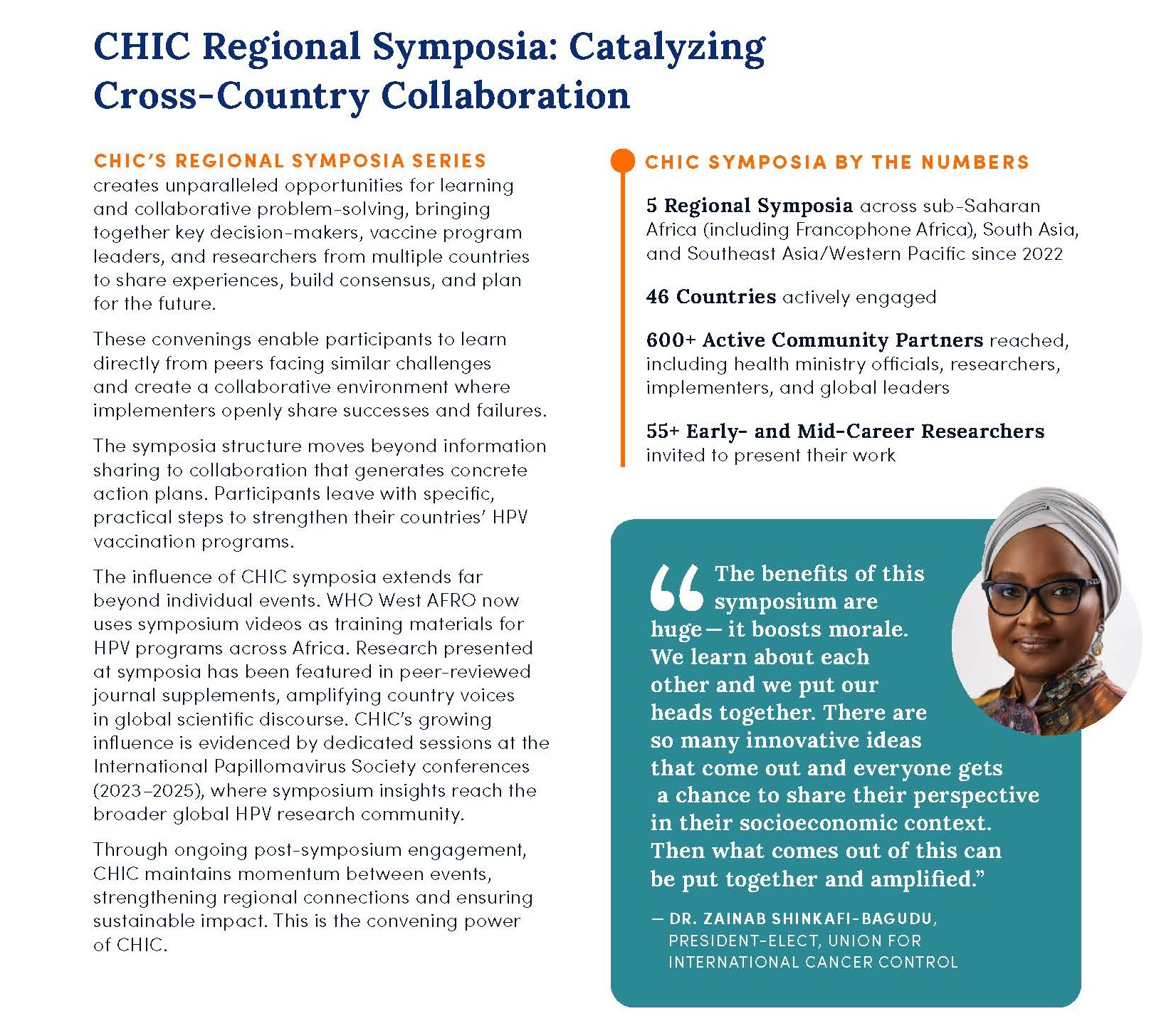
To foster the leadership of a robust community of practice around HPV vaccines that connects scientists, decision-makers and decision-influencers in country and global vaccine markets, in order to:
- Build consensus on best practices and the research agenda
- Strengthen, equip, and empower the HPV vaccine community of practice
- Build consensus on evidence for practices in policies, programs and research priorities
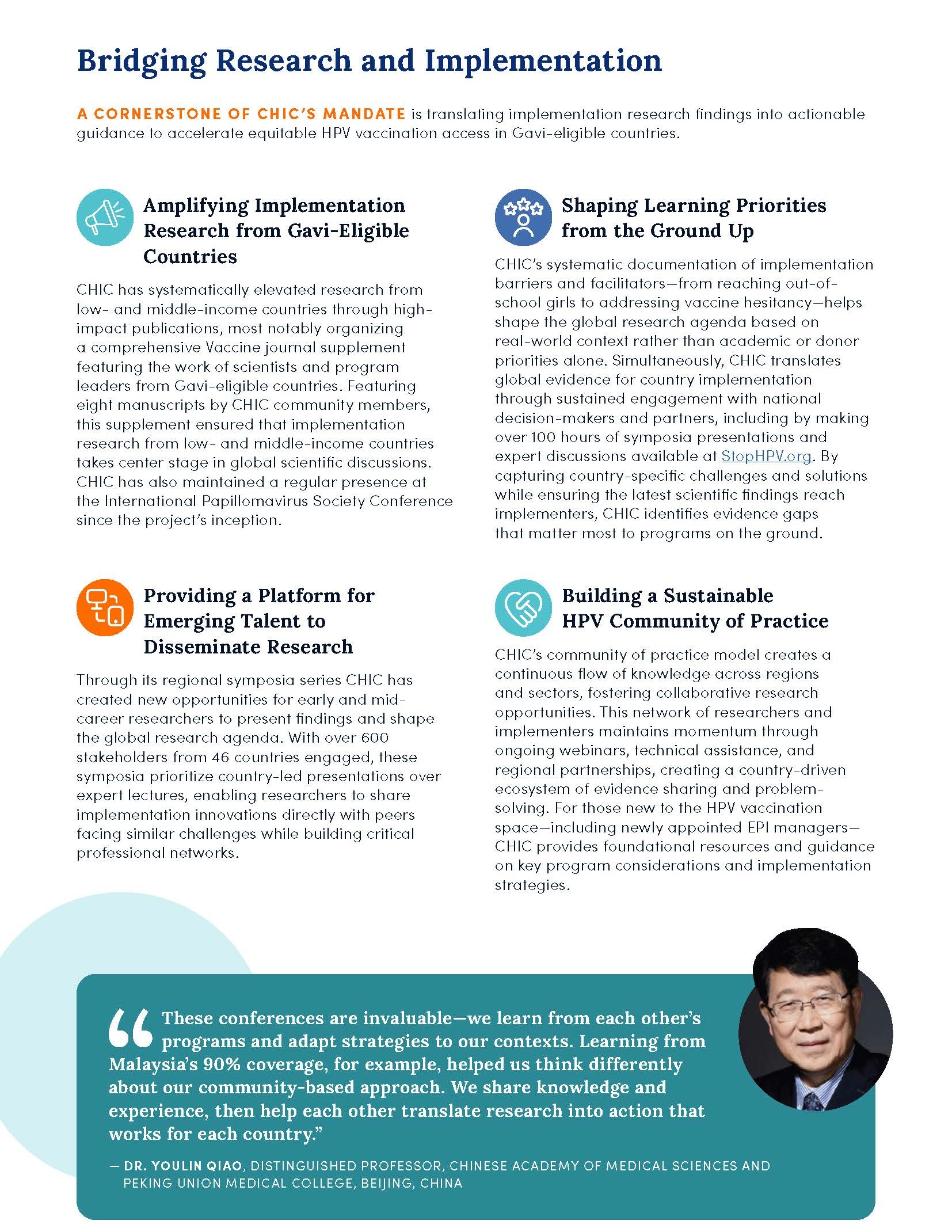
To provide and manage a platform that identifies and elevates voices of the global south to shape global science, policy and program dialogues on HPV vaccination, in order to:
- Increase translation and use of evidence to shape policies and programs
- Increase salience of HPV vaccination among regional and country decision-makers and key influencers in Gavi-eligible countries
This project is supported by the Gates Foundation.
Coordination
Jhpiego
A Johns Hopkins University affiliate, Jhpiego is a nonprofit global leader in the creation and delivery of transformative healthcare solutions that save lives. Through our close partnerships with local communities, policymakers, donors and health providers, we are able to transform health care systems, leading to better health across a lifespan—from pregnancy to delivery, and beyond. By embedding our know-how and skills into everyday practice, we are creating lasting change that improves the health of some of the world’s most disadvantaged for generations to come. During the pandemic, Jhpiego has partnered with the 30+ countries where we work to prevent, identify and respond to COVID-19, safely deliver care and maintain essential, lifesaving health services for women, men and their families.
The University of Antwerp
The University of Antwerp is a young, dynamic and forward-thinking university. It integrates the assets of its historical roots with its ambition to contribute positively to society, provides access to and disseminates scientific knowledge through research, teaching and academic service to the community and accomplishes these tasks in a spirit of academic freedom and responsibility.
The Centre for Evaluation of Vaccination (CEV) at the University of Antwerp has served as the secretariat for the Viral Hepatitis Prevention and Control Board (VHPB) since 1991, and the HPV Prevention Control Board (HPV Board) since 2015. In over 70 meetings since 1991 and 2015, these boards pioneered a unique approach for helping countries, regions, and international partners introduce Hepatitis B and HPV vaccines into their National Immunization Programs. The VHPB and HPV Prevention Boards have focused on touching the ground; focusing on the real-world issues, problems and successes faced by immunization managers, decision makers, partners in academia, partner agencies, and civil society.
The London School of Hygiene and Tropical Medicine (LSHTM)
The London School of Hygiene & Tropical Medicine (LSHTM) is renowned for its world-leading research, postgraduate studies, and continuing education in public and global health. LSHTM has 3,300 staff based all around the world, with core hubs in London and with additional sites in The Gambia and Uganda. Researchers at LSHTM explore all aspects of health challenges, from fundamental laboratory science to policy appraisal and analysis, encompassing statistical, clinical, laboratory, epidemiological and social science research in the UK and globally. LSHTM is involved at every stage of the research pipeline, from basic science to evaluation of health interventions.
The Vaccine Confidence Project (VCP) at The London School of Hygiene & Tropical Medicine monitors public confidence in immunisation programmes by building information surveillance systems for early detection of public concerns around vaccines; by applying diagnostic data tools to collected data to determine the risk level of public concerns in terms of their potential to disrupt vaccine programmes; and to provide analysis and guidance or early response and engagement with the public to ensure sustained confidence in vaccines and immunisation. This initiative also defines a Vaccine Confidence Index as a tool for mapping confidence globally. The VCP has extensive experience in investigating the root causes of challenges with vaccine confidence in various contexts, including around HPV vaccination in countries around the world.
How we work with countries